

Richard Dewar
Richard Dewar

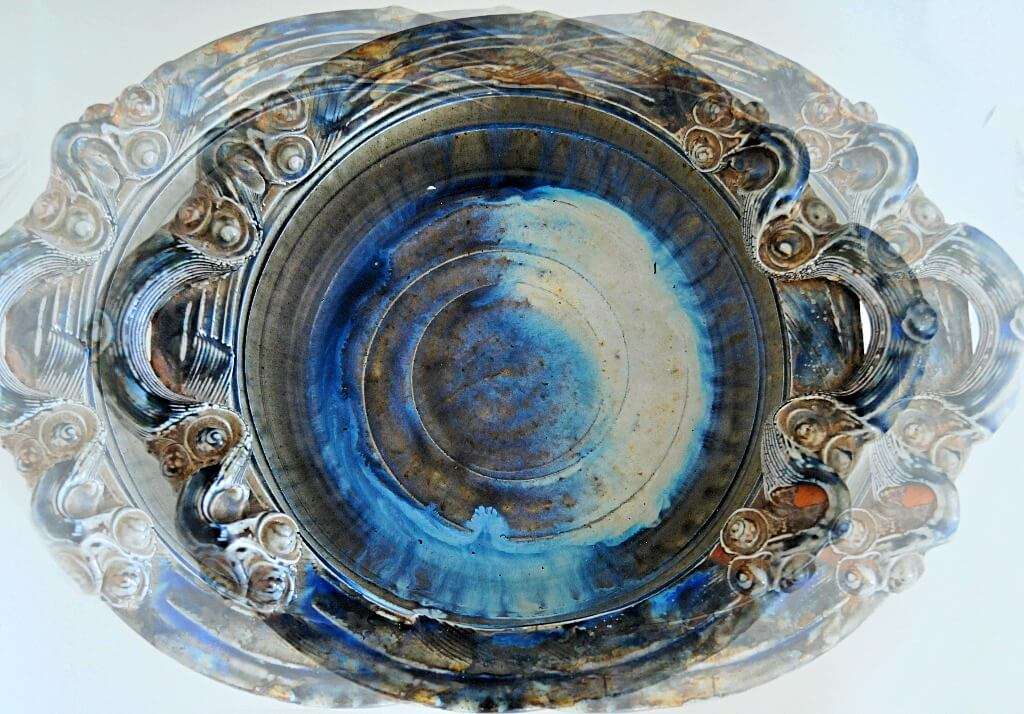
I met Richard many years ago at an event for the Southern Ceramics Group. Richard was demonstrating to a group of us. Showing us how he threw and put together his pots. We normally met a few times a year and would have a demonstration from a potter. We would share a Potluck lunch together halfway through the day. I purchased this Bowl after the demonstration. It has been my fruit bowl for around 15 years now. I love the colours of the Salt Glazed Bowl.
About Richard Dewar

Richard and Justine Dewar live and work in Locoal-Mendon. The pottery is located in the hamlet of Keryavec, passing via the village of Le Clozo (see map and follow our signs). Richard trained as a ceramic artist at both Bath and Harrow Schools of Art. He then established his first studio in the Forest of Dean, UK. After moving to France in 1979, Richard and Justine created their first French workshop in Avessac, Loire-Atlantique. In 2007 they constructed a new house and studio in Locoal-Mendon, Morbihan, where they make salt-glazed, wood-fired stoneware and a small number of individual raku pieces. Richard’s work has been seen in numerous exhibitions throughout Europe and the world including France, England, Germany, New Zealand and Japan..
Definition of salt glaze

A stoneware glaze produced by vaporising common salt in the fire of the kiln, at the height of the firing. so that the sodium of the salt reacts with the silicates of the ware. This forms a coating, of glassy acid-resistant mixed silicate of sodium and aluminium.
Link To Ricard Dewars Website http://www.dewarceramics.fr/
News 2020

News 2020
The year 2020 began with cooking in the large wood oven in Keryavec. Despite the storm and the rain, we are happy with the result. Many thanks to Jacky and Marie-Pierre for their help during the night!
January 07 – February 29 Exhibition of Ceramics by Richard Dewar Le Courtil Locoal-Mendon Media Library
News 2019

February 19 – 26 Anagama cooking at Frank and Ellie Theunissen in Cordes-sur-Ciel with Alicia, Pep, Ann and Jan
April 27 – 28 Le Printemps des Artistes Locoal-Mendon
April 13 – June 23 Exhibition: Instant T Terre et Terres, Giroussens
6 – 9 September Tutor Spring Fever Ceramic event, Queensland, Australia
Buy Richard’s book at Amazon

High firing can achieve finishes that appeal to many potters. Yet, firing clay at temperatures of about 1300 degrees centigrade imposes demands on the clay, glazes and kilns used that are not a problem with lower firings. This work discusses the various considerations that need to be taken into account when working at these temperatures and shows the myriad of techniques and glazes that can be employed. It uses the work of an international group of artists to illustrate these methods. Stoneware (Ceramics Handbooks)


