

Temple of Jupiter Split
Unveiling the Temple of Jupiter
A Symphony of Elegance for Robert Adam

The Scottish architect Robert Adam considered the Temple of Jupiter a masterpiece among European monuments. Explore its enchanting rectangular floor plan, complemented by a six-column porch that graces an elevated podium.
Architectural Marvel Temple of Jupiter Split

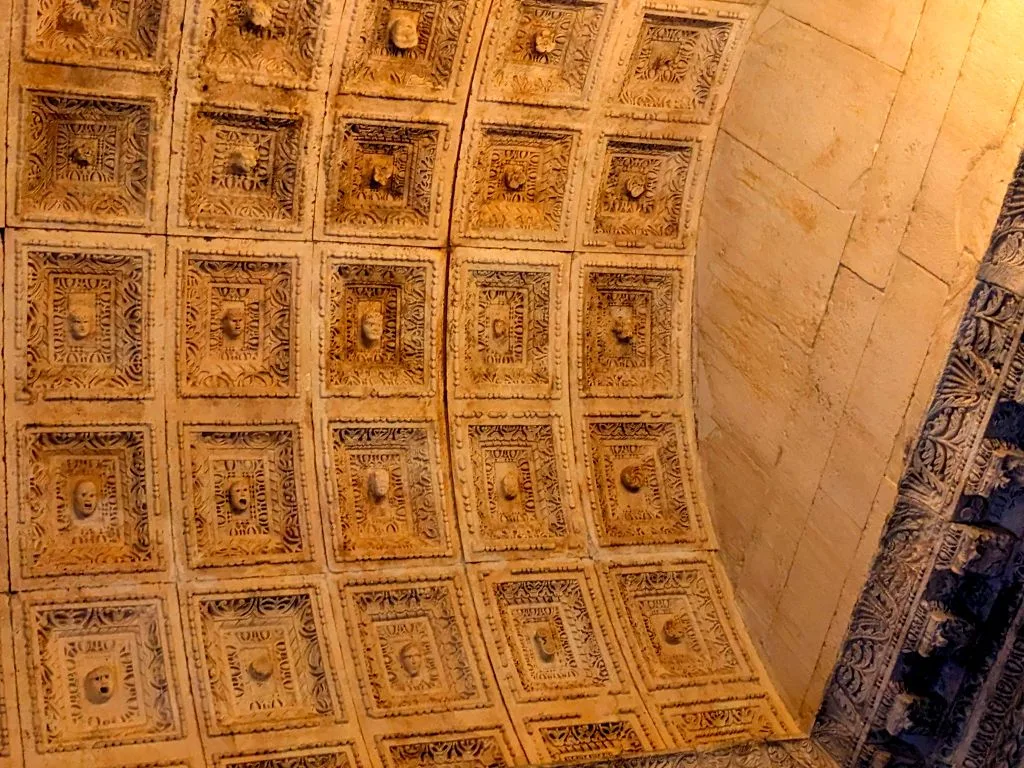
Step into a world where the Temple’s influence echoes through time, shaping the early Renaissance visions of Andrija Alessi and Nikola Firentinac in Trogir. Embossed portal images and a mesmerizing barrel coffered vault tell tales of artistic brilliance that captivated the legendary Robert Adam.
From Temple to Baptistery

Embark on a journey through the Late Antiquity era, witnessing the Temple of Jupiter’s transformation into a Baptistery. Beneath its hallowed halls, a crypt dedicated to St Thomas emerged, and in the 13th century, a Baptismal Font graced by medieval elegance materialised.
Medieval Elegance Temple of Jupiter Split

Intrigue surrounds the Baptistery as it unveils the earliest representation of a European king on a Medieval stone sculpture. Admire the Baptismal Font, born from the altar screen pluteus, adorned with a figure of a Croatian king, echoing the medieval history of this architectural marvel.
St. John the Baptist’s Legacy

Journey further as the Baptistery transforms into a tribute to St John the Baptist. Delight in the Secession sculpture is a testament to Ivan Meštrović’s artistic brilliance. The temple, now named after St John the Baptist, stands as a living legacy.
Granite Sphinxes and Diocletian’s Legacy

Embark on a captivating visit to the Baptistery, open for all curious souls. Pay homage to the Secession sculpture of St John the Baptist and encounter one of the granite sphinxes brought from Egypt by Emperor Diocletian. History comes alive with an entrance fee, granting access to this architectural gem.
Location of The Temple of Jupiter Split
For the Love of Travel – Holiday Reviews Split Croatia

- Tourist Beaches Split Croatia
- Split Transport Travel Guide
- Diocletian Palace Gates Split
- Temple of Jupiter Split
- Cathedral of Saint Domnius Split
- Pizza in Split
- Savoury Burek Delights at Milnar Split
- Museum of Fine Art Split
- Croatian Maritime Museum
- Mestrovic Gallery
- Mestrovics Crikvine Kastilac
- Split Ethnographic Museum
- Marjan Park
- Trogir Croatia
- Split Fish Market
- Split Markets
- Klis Fortress Croatia
- Kavana Procaffe Split Croatia
- Walking Slatine to Trogir
- Walking Forest Park Marjan Split


